

NeoOBS study.
About the global
neonatal sepsis observational study.
Between 2018 and 2020, GARDP worked with partners to carry out one of the largest ever observational studies on the care of babies with sepsis. The global neonatal sepsis observational study (NeoOBS) was conducted on more than 3,200 newborns across 19 sites in 11 high-, middle- and low-income countries across four continents.
The study was designed to assess which antibiotics are currently being used to treat newborns suffering from sepsis, and to what extent resistance makes these treatments ineffective. D out by GARDP in partnership with St George’s, University of London, Penta–Child Health Research, the Medical Research Council Clinical Trials Unit at University College London, and the University of Antwerp, the aim was to inform the development of improved antibiotic treatment regimens for neonatal sepsis worldwide.
Global neonatal sepsis observational study
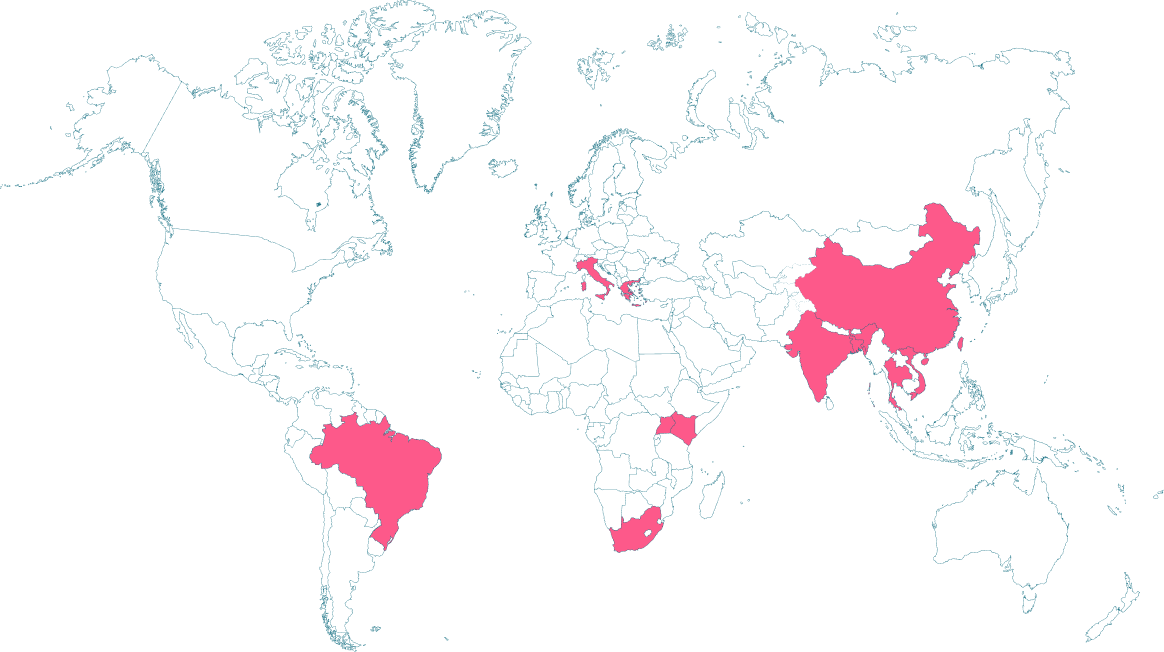
Participating countries:
- Bangladesh
- Brazil
- China
- Greece
- India
- Italy
- Kenya
- South Africa
- Thailand
- Vietnam
- Uganda
Addressing gaps in diagnosis and treatment of neonatal sepsis.
The NeoOBS study generated data and tools to support future antibiotic trials for neonatal sepsis.
It aimed at providing a clearer picture of mortality rates in hospital settings, and mapping the care and antibiotic treatment provided and treatment strategies adopted. The study also characterized the microbial causes of neonatal sepsis, including patterns of antibiotic resistance and generated a simple severity score that could be used in any neonatal intensive care unit.
Finally, the study also informed the design of trials evaluating treatments for neonatal sepsis.
Key findings
As one of the largest hospital-based multi-country observational studies of neonatal sepsis ever conducted, NeoOBS was a landmark study in terms of its size. It was carried out across a range of geographies and settings with data collected from multiple regions, across sites including district general hospitals, general tertiary-level hospitals and specialist children’s and maternity hospitals. It generated comprehensive, consistent and high-quality data on clinical signs, care provided, microbiology, multiple laboratory tests and outcomes, focusing on 28-day mortality.

In-hospital mortality was high but variable, ranging from 1-27% across sites.

Antibiotic-prescribing practice varied markedly, with limited use of World Health Organization-recommended regimens in many hospitals.

Last-line antibiotics (carbapenems) were prescribed to 15% of babies with neonatal sepsis enrolled in the study.

Resistance to commonly used antibiotics plays a major role in determining outcomes of newborns with neonatal sepsis in hospitals.
GARDP recommendations.
When updating guidance for the empiric treatment of neonatal sepsis, the results of the NeoOBS study should be considered, especially for countries that participated in the study. The neonatal sepsis Severity Score to guide clinical care by healthcare providers should also be further evaluated.
Other preventive measures, such as access to antenatal care, maternal vaccination, and water, sanitation and hygiene, should also be considered in the context of neonatal care. AMR National Action Plans that fully account for the needs of children and newborns, including infection prevention and control and access to antibiotics, should be developed and funded. Increasing investment in the surveillance of pathogens and resistance patterns was also recommended, including in children and newborns.
The development of new tools and other measures for diagnosis, treatment, and care of newborns with drug-resistant infections should also be prioritized, especially novel treatments that enhance neonatal care.