

Our portfolio.
How GARDP prioritizes its portfolio?
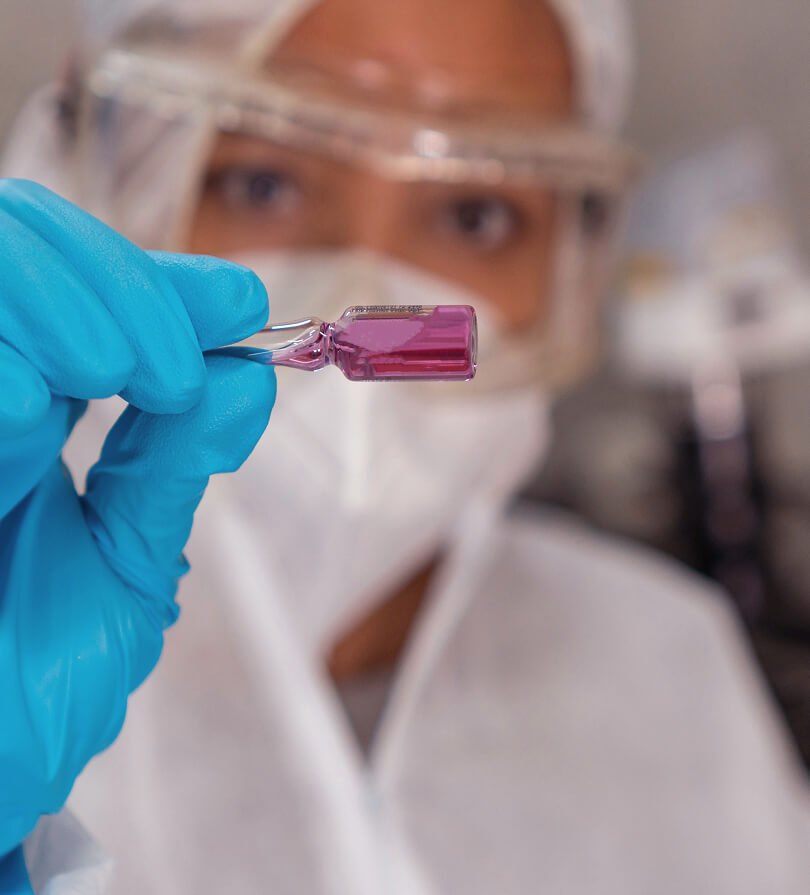
GARDP is pioneering a new way to develop and improve access to innovative, new antibiotic treatments that specifically target priority pathogens – multidrug-resistant infections that pose the greatest public health threat.
Our unique antibiotic research and development (R&D) model is designed to address the public health failure at the heart of the antimicrobial resistance (AMR) crisis by enabling the right antibiotic treatments to be developed and made available to the people who need them.
GARDP focus.

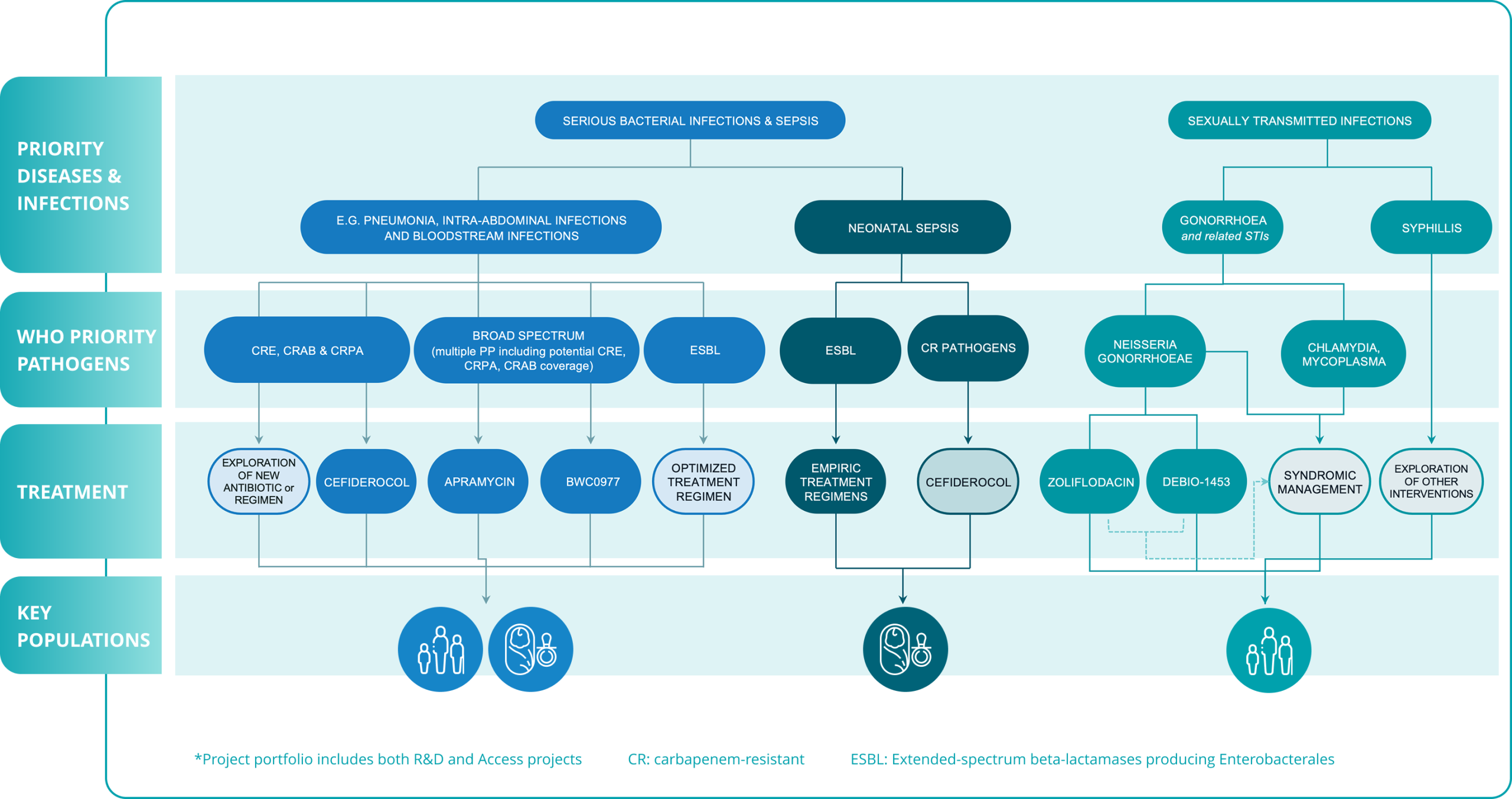
To protect people from the rise and spread of AMR, GARDP develops its disease area strategies focusing on three overarching criteria.
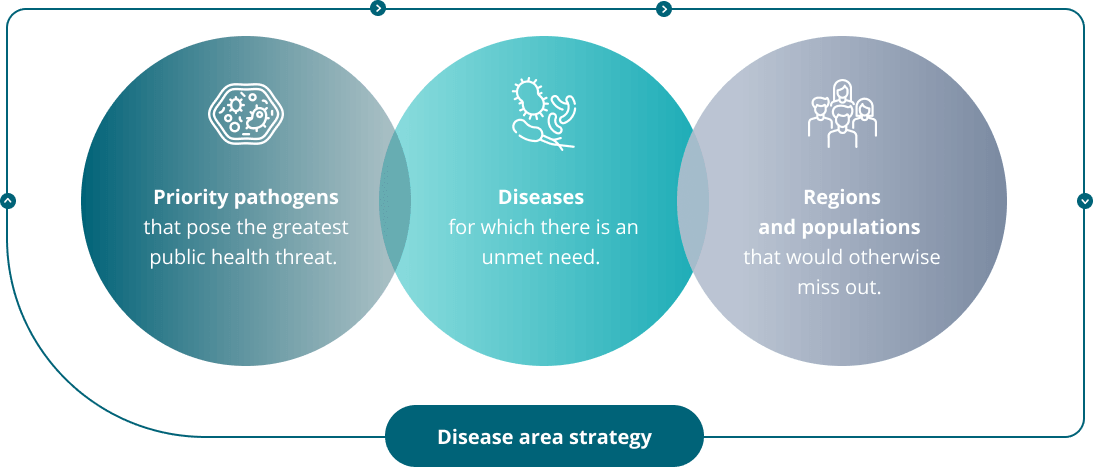
Our programmes prioritize serious bacterial infections and sepsis (including neonatal sepsis) and sexually transmitted infections (with a focus on gonorrhoea), and target World Health Organization (WHO) priority pathogens that are responsible for particularly deadly and debilitating drug-resistant infections.
GARDP also concentrates its efforts on populations who are disproportionately affected by drug resistance – including newborns, children and women, particularly in low- and middle-income countries (LMICs).
Serious bacterial infections
Serious bacterial infections are one of the leading causes of death for people in hospitals, which can also escalate to life-threatening complications like sepsis.

Children’s antibiotics
Newborns are particularly vulnerable to sepsis because their immune systems are underdeveloped.

Sexually transmitted infections
Some sexually transmitted infections, like gonorrhoea, are in danger of becoming untreatable again because of drug resistance.

Access to antibiotics
A critical, yet often overlooked, component of the AMR global response is people’s lack of access to antibiotics.

Discovery & exploratory research
Discovery and exploratory research is needed to deliver innovative preclinical antibiotic candidates that could become next-generation antibiotics.
We leave no stone unturned in the search for effective new treatments.
GARDP engages in carefully selected antibiotic drug development and access projects to address urgent public health needs, with access factored into every stage of the process, from scientific discovery and R&D to supporting the manufacturing, registration and introduction of treatments.
We are directly involved in pharmaceutical and clinical development to ensure that every treatment we develop with partners is safe, effective, affordable and suitable for use in diverse settings, including those with high AMR burden and limited resources.

The development of new first-in-class antibiotics:
Gonorrhoea: zoliflodacin, Debio 1453
Serious bacterial infections: BWC0977

Improving access to existing antibiotics:
Serious bacterial infections: cefiderocol

Combining existing antibiotics to create new treatments:
Neonatal sepsis: combinations of flomoxef, fosfomycin and amikacin

Repurposing existing
antibiotics:
Serious bacterial infections: apramycin
Zoliflodacin
GARDP has co-developed zoliflodacin, a new first-in-class, single-dose, oral antibiotic for Neisseria gonorrhoeae. It is one of the new treatments developed solely for gonorrhoea, and the first to be developed by a non-profit R&D model.
GARDP has the rights to register and commercialize the product in more than three quarters of the world.
Development of BWC0977
GARDP is working with Bugworks Research Inc. to co-develop a novel, broad-spectrum antibiotic BWC0977 and make it accessible in 146 countries.
Currently in phase 1 development, this first-in-class drug candidate has demonstrated broad-spectrum activity in the lab against all critical priority pathogenic bacteria that commonly cause life-threatening serious bacterial infections.

Expanding access to cefiderocol
Through a milestone technology transfer agreement between the Japanese pharmaceutical company Shionogi and Indian manufacturer Orchid Pharma, GARDP aims to expand access to cefiderocol.
Cefiderocol is the only recently authorized antibiotic with activity against all Gram-negative bacteria on the WHO critical priority pathogens list. This collaboration will help to expand access to this important drug to 70% of the globe.
NeoSep1 trial
Launched in South Africa and Kenya in early 2023, the NeoSep1 trial is evaluating new combinations of existing antibiotics and comparing them to treatment regimens that are currently used to treat newborn babies with suspected sepsis. It is also looking at the appropriate dose and formulation for newborns.
The innovative trial design of NeoSep1 guarantees success by generating actionable treatment data. The trial will be expanded to other countries in Africa and the Asia-Pacific region with the expected target of enrolling more than 3,000 newborns by end 2028.
GARDP portfolio
Resources
Annual report 2025
5 BY 25 report
Agreements