

Debio1453.
Advancing the development of a novel gonorrhoea drug.
Historical experience with Neisseria gonorrhoeae demonstrates that reliance on a single antibiotic class leads to the predictable erosion of susceptibility over time. Therefore, in addition to GARDP’s work on zoliflodacin, it is looking at options for additional treatments for gonorrhoea and assessing the need to secure better optimal treatments for STIs.
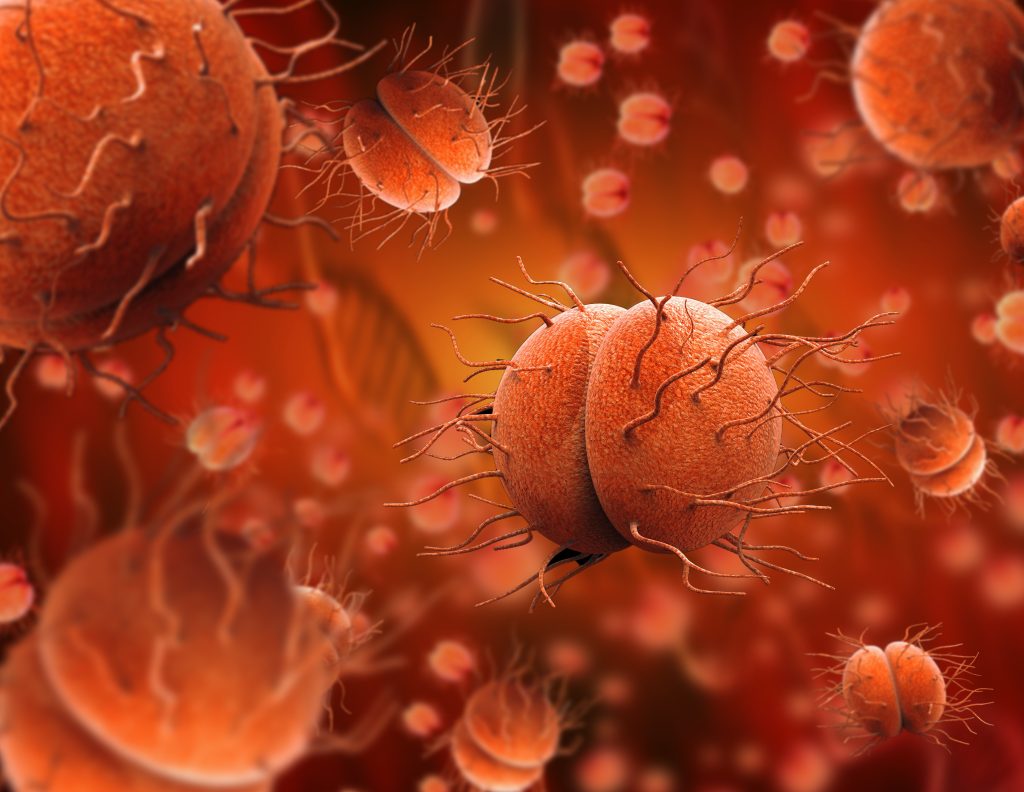
In light of this, GARDP and Debiopharm have entered into a collaboration and license agreement to pursue the development of Debio1453, a novel antibiotic targeting N. gonorrhoeae. The partnership will help ensure that gonorrhoea continues to be a treatable disease and will alleviate the risk of future resistance emerging, by ensuring that the antibiotic pipeline continues to be replenished.
Having developed resistance to almost all antibiotics used to treat it. Only one last recommended treatment, ceftriaxone, remains effective, and we are seeing a growing number of cases that are resistant to this. Even with the recent approval in late 2025 of two new first-in-class treatments for N. gonorrhoeae, there is growing concern that without ongoing development of innovative new treatments, like Debio1453, the rapid emergence of resistance will see “super gonorrhoea” outpace antibiotic development.


What is Debio1453 and how does it work?
Debio1453 is a novel candidate that has demonstrated strong activity against multidrug-resistant strains of gonorrhoea by targeting the FabI enzyme, essential for bacterial survival, with the added crucial advantage of showing no cross-resistance to currently available antibiotic classes.
GARDP’s role in advancing Debio1453.
Debio1453 successfully progressed from a preclinical candidate to a clinical stage asset with crucial funding from CARB-X. As part of the agreement with GARDP, Debiopharm remains in charge of the completion of the Debio1453 phase 1 clinical trial, while GARDP will lead other non-clinical and clinical development activities, as well as chemistry, manufacturing and controls (CMC) activities.
The potential impact
The collaboration aims to ensure that the global development and future access strategies of Debio1453 are aligned with country-specific regulatory requirements, health system realities and local economic constraints.
Debiopharm has granted GARDP manufacturing and commercialization rights for Debio1453 across more than 160 countries to ensure future global access. The partnership also demonstrates the flexibility of GARDP’s public-private partnership model where a Swiss for-profit and a Swiss non-profit are working together to develop an innovative new solution to address gonorrhoea.
Where does the project stand?
GARDP and Debiopharm have just kicked off the collaboration and license agreement to pursue the development of Debio1453.

Key milestones
Signed
2025 – GARDP signed a memorandum of understanding with Debiopharm to explore co-development of Debio1453.
Signed
2026 – GARDP signed a collaboration and license agreement with Debiopharm to advance the development of Debio1453.