

Global threat.
Antimicrobial
resistance has reached a tipping point.
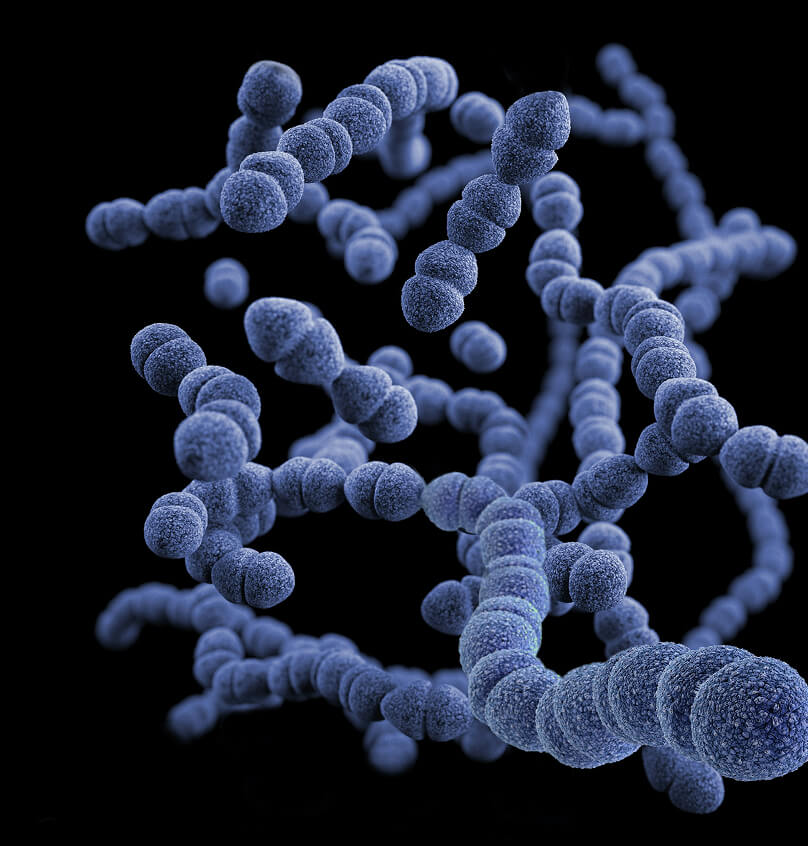
Antimicrobial resistance (AMR) occurs when microbes naturally develop defences to protect them against treatments devised to kill them. Linked to more than 4.7 million deaths each year, AMR is already one of the world’s leading killers, undermining modern medicine and making once treatable infections – such as urinary tract infections, and routine procedures and surgeries – increasingly difficult to treat.
But unlike other major global health threats like tuberculosis, malaria and
HIV/AIDS that are steadily declining, AMR-related deaths are now projected to rise sharply, increasing by more than 70% by 2050.
Drug-resistant Gram-negative infections are now outpacing antibiotic development.
A key reason for this upsurge is the rise and spread of Gram-negative infections. It can be particularly difficult to treat these kinds of infections and to develop antibiotics against them, because they possess additional natural defences thanks to their cellular structure. With some Gram-negative infections, like those caused by carbapenem-resistant Acinetobacter baumannii (CRAB) and carbapenem-resistant Enterobacteriaceae (or CRE), half of those infected may die within a month. The current response is falling behind, either because the right antibiotics against difficult-to-treat Gram-negative bacteria are not being developed, or if they exist, they are not reaching the people who need them.
Investing in innovation and access.
Despite the critical need for new treatments, the global antibiotic development pipeline is shrinking. Of the 90 antibacterials currently in development worldwide, only five are both truly innovative and target at least one World Health Organization (WHO) priority pathogen – the bacteria that pose the greatest threat to public health.
GARDP is working hard to ensure that the right antibiotics are developed, and that people most in need get access to them. According to the latest GRAM report, in the coming years these two interventions – innovation and access – will be the most impactful, preventing more than 11 million and 50 million AMR-related deaths respectively by 2050. Our focus is on three criteria:
- Priority pathogens – those that pose the greatest public health threat.
- Diseases – for which there is an unmet need.
- Regions and populations – key groups that would otherwise miss out.
GARDP’s public-private partnership model is taking a unique three-pronged approach to tackle the AMR crisis: integrated R&D and access; collaboration and license agreements; and equal partnerships.
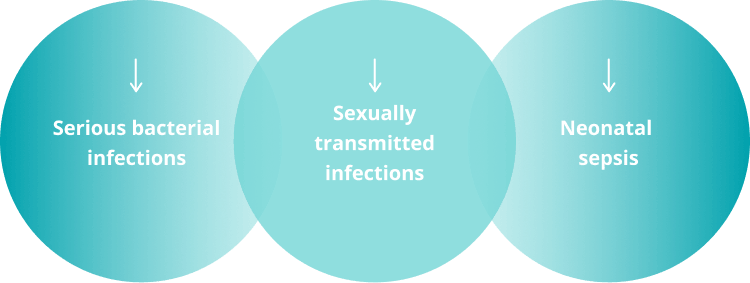
We are applying this approach to three priority disease areas:
Global challenges are compounding the AMR crisis.
Global trends, like climate change, conflict and human migration, are compounding the threat of AMR. Conflict, by damaging the health and sanitation infrastructure, and creating non-sterile conditions for wounds, is fueling the rise and spread of AMR. Climate change, through rising temperatures and extreme events like floods and droughts, is leading to increased drug resistance. And large-scale migration is enabling drug-resistant pathogens to travel faster and farther than ever before.
AMR resources
AMR fact sheets
Global challenges
Priority pathogens